
Why Your Fort Myers Lawn Gets Brown Spots in July (It's Not a Drought)
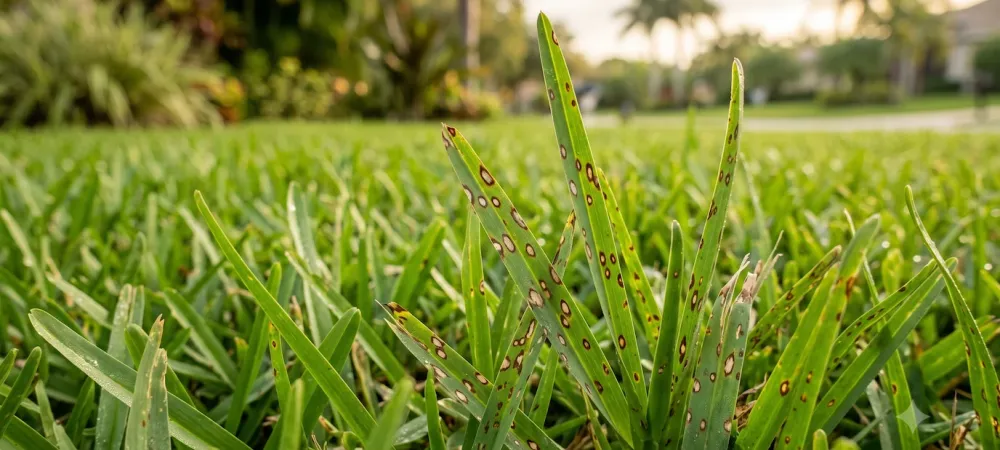
Brown or tan patches appearing on Fort Myers lawns in July are not a sign of drought. Southwest Florida is in the middle of the rainy season, and the grass is not drying out. The most common cause of these patches is gray leaf spot, a fungal disease that the University of Florida's IFAS Extension identifies as the most damaging summer foliar disease of St. Augustinegrass in the state. Gray leaf spot thrives in sustained heat, daily rainfall, and overnight humidity, the exact conditions that define Fort Myers from June through September.
What Causes Brown Patches on Fort Myers Lawns in the Summer?
Gray leaf spot is caused by the fungus Pyricularia grisea. It infects warm-season turfgrasses throughout Florida, with St. Augustinegrass being the most susceptible variety and the dominant grass type across residential lawns in Fort Myers, Cape Coral, Estero, and Bonita Springs. The fungus spreads through spores carried by wind and water splash, landing on grass blades and germinating when the surface stays warm and wet. Afternoon and evening storms that wet the grass, followed by overnight temperatures above 75°F, create the infection window the fungus uses efficiently.
Gray leaf spot is active in Southwest Florida lawns right now in 2026. Lee County averages 6 to 8 inches of rainfall in July, according to historical NOAA data for Fort Myers. That moisture, combined with nighttime temperatures that rarely drop below 80°F in the height of summer, puts the region squarely in peak gray leaf spot season from mid-June through late September.
How to Tell Gray Leaf Spot From Drought or Chinch Bug Damage
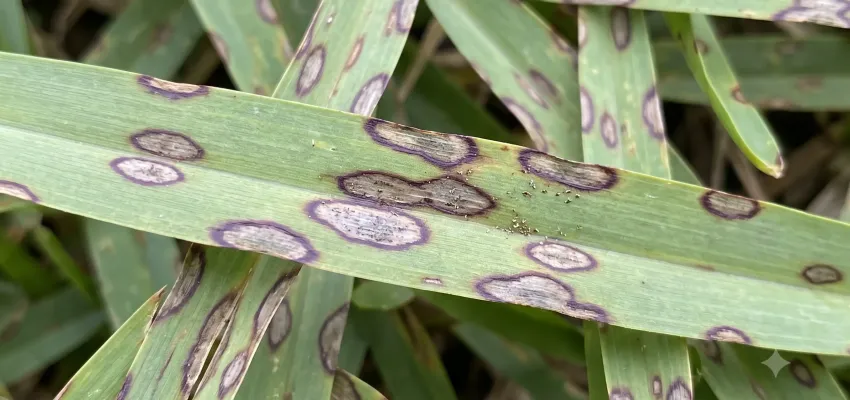
Gray leaf spot, drought stress, and chinch bug damage can each produce brown or thinning areas in a Southwest Florida lawn, but they look different on closer inspection. Gray leaf spot creates small, oval lesions on individual grass blades. Each lesion is tan or brown in the center with a distinct darker border, sometimes described as an eye or target pattern. When a large area of the lawn is infected, the individual blades look scorched or burned rather than pulled, chewed, or uniformly faded.
Drought stress produces uniform tan or gray discoloration across the lawn without visible spots on individual blades, and it typically follows an extended period of reduced rainfall rather than building during the active rainy season. Chinch bug damage begins as yellowing in the hottest, sunniest areas of the yard, including driveways, south-facing lawn edges, and areas near sidewalks and pavement. The insects are visible under the thatch when you part the grass at the edge of the affected zone. Treating the wrong problem delays recovery and can make the actual issue worse.
Why Gray Leaf Spot Gets Worse During Florida's Rainy Season
Gray leaf spot pressure is highest in summer because the disease needs both heat and sustained moisture to spread. The University of Florida's IFAS Extension identifies June through September as the statewide peak infection period, with the disease most active when nighttime temperatures remain above 75°F, a threshold Fort Myers reliably exceeds from May through October. The fungal spores that cause gray leaf spot spread by water splash, so afternoon storms accelerate transmission through the lawn more than many other diseases.
The disease also intensifies when turf produces rapid new growth. Lawns that received quick-release nitrogen fertilizer in late spring may see elevated gray leaf spot pressure through the summer, because fast-release nitrogen pushes soft, tender new tissue that the fungus can penetrate more easily than hardened, mature blades. Slow-release formulations feed the lawn more gradually and reduce that window of vulnerability, which is one reason a professional program built around slow-release applications is more protective than standard retail fertilizers applied at high rates.
What Lee County's Summer Fertilizer Ordinance Has to Do With Your Lawn
Lee County Ordinance No. 0808 restricts the application of fertilizers containing nitrogen or phosphorus across unincorporated Lee County each year from June 1 through September 30. The ordinance was enacted in 2008 to prevent nutrient runoff into the Caloosahatchee River and surrounding waterways during the season of highest rainfall. Fort Myers, Cape Coral, Estero, Bonita Springs, and surrounding communities all fall within this restricted area.
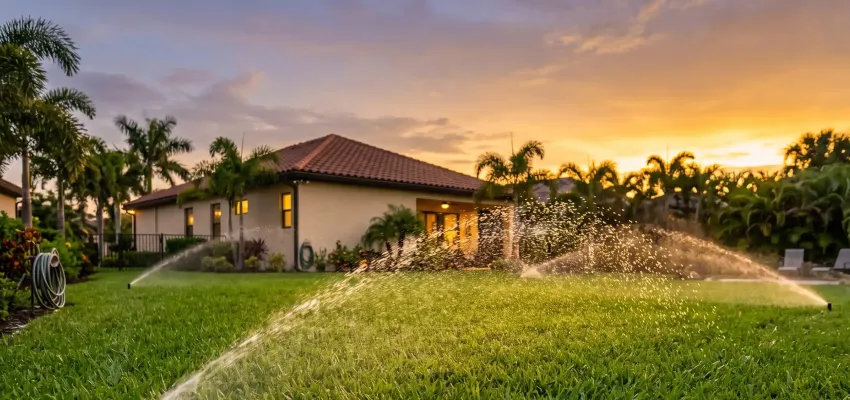
For lawn care during the blackout period, a professional service company in Lee County cannot apply standard nitrogen or phosphorus fertilizer to your lawn, and that constraint is part of why a spring fertilization program matters so much. Lawns that were set up with a slow-release fertilizer application before June 1 are designed to feed gradually through the summer without creating the tissue surge that fungal disease can exploit. If gray leaf spot is a recurring issue on your property despite a compliant fertilization program, the more likely contributing factor is irrigation timing, specifically running the system in the evening rather than early morning.
Can Gray Leaf Spot Be Treated, or Do You Have to Wait It Out?
Gray leaf spot can be treated with a fungicide, and early application improves outcomes significantly. Fungicides containing azoxystrobin, propiconazole, or thiophanate-methyl are recommended by UF/IFAS Extension for gray leaf spot management in Florida turfgrass. These products work best as early-stage or preventative treatments applied before large areas are infected. Once the disease has spread across a significant portion of the lawn, fungicide can slow further spread, but cannot restore blades already damaged.
Homeowners who catch small, isolated lesions early can apply a labeled fungicide before the disease advances. For larger affected areas or lawns where gray leaf spot returns every summer, a professional assessment is the more practical first step. Recurring disease usually reflects an underlying condition that fungicide treatment alone cannot correct: irrigation habits that keep the lawn wet overnight, excess thatch that traps moisture at the soil surface, shaded areas with poor airflow, or drainage patterns that hold moisture.
How a Professional Lawn Program Protects Southwest Florida Lawns Through Rainy Season
Managing a Southwest Florida lawn through the rainy season requires a different approach than spring or fall care. A professional lawn care program for the region accounts for the Lee County fertilizer blackout period, applies slow-release nutrients in spring before restrictions begin, adjusts irrigation recommendations to reduce overnight moisture on the lawn, and monitors for early signs of fungal disease on each service visit.
Land-Art has been caring for lawns across Fort Myers, Cape Coral, Estero, and Bonita Springs long enough to know how the rainy season unfolds here and what it does to turfgrass. The goal is a lawn that stays healthy through the summer without needing reactive disease treatment every July. That outcome starts with the decisions made in the months before the rainy season begins.