


Image
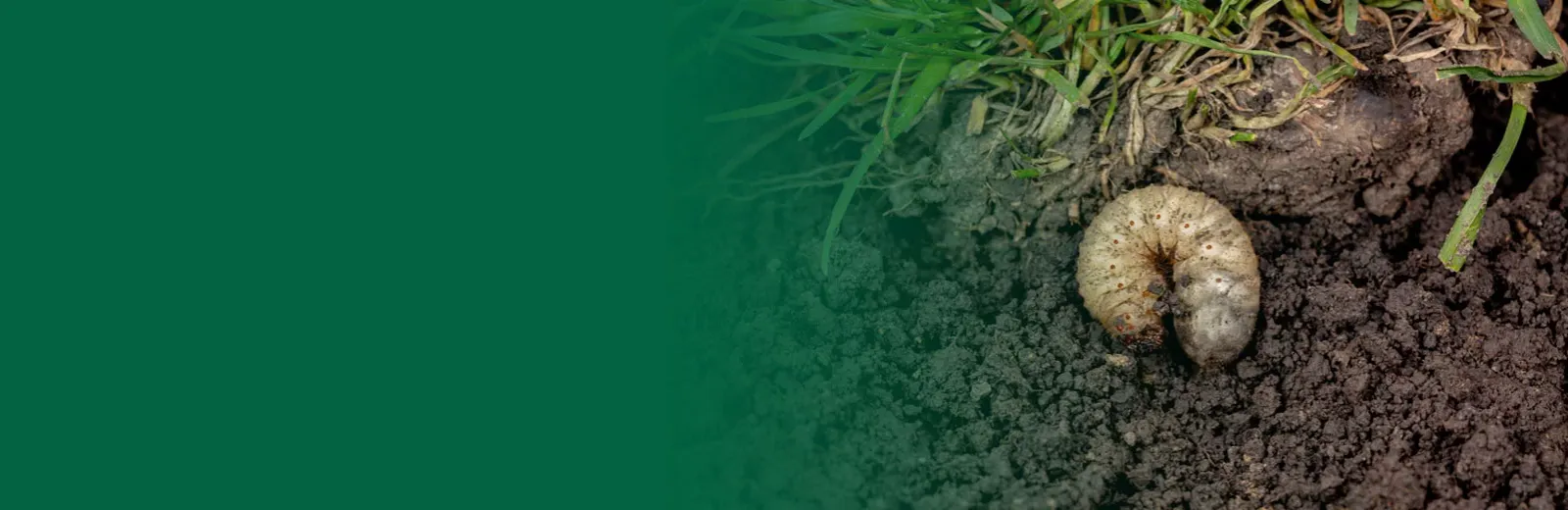
Grub in dirt
Eliminate Grubs & Take Your Lawn Back
Icon
Image
complimentary service call
Complimentary Service Calls
Icon
Image
guaranteed icon
Owner-Guaranteed Satisfaction

Grub Control in Ohio and Florida

One of the most destructive of these lawn pests is the grub. As you probably already know, grubs are public enemy number one when it comes to lawn pests. Grubs are actually the larvae of June bugs that emerge in the late spring to lay eggs in your lawn. The grubs feed on the roots of your grass from June to August and can utterly devastate a lawn.

Here are some signs that you might have a grub problem:

  • Is your lawn root system damaged or weakened? 
  • Is your yard attracting large flocks of birds pecking at your sod?
  • Are animals digging up your yard at night?

Unlike the beneficial earthworm that naturally aerates the soil, grubs feed on the tender roots of grass and can quickly turn a healthy lawn into a barren wasteland, often resembling a prolonged drought.

Get A Free Quote

Name
Contact Info
Address
By submitting this form, you are agreeing to the privacy policy and terms and conditions.
Validation
Submission
Get Started Today! Call us at 419-666-5296 or

About this Service

If you suspect a grub infestation, call the experts at Land-Art immediately before any more damage is done.

When you have a grub problem, the worms themselves aren’t the only dangers your yard faces. Grubs are also a delicacy for a number of other pests that can lay waste on your beautiful turf.

  • Skunks, Racoons, Opossums: These animals are also very fond of grub and can smell them from far away. They’ll quickly dig up your lawn to get at the delicious grub.

Because grubs are subterranean dwellers, it’s really hard to tell if you have a problem until the signs become visible, but by then, it’s already too late. It’s important to take precautionary measures and watch your lawn carefully in the spring. If you see grass starting to wilt or die in places, check under the lawn to see if there are grubs.

A healthy lawn can sustain a few grubs, but if you find more than ten per square foot, then it’s time to call the professionals at Land-Art. We will come out to evaluate your situation and then discuss with you the best way of moving forward with treatment. We will then apply a grub treatment that will help drive down the grub population. Grubs can be a real nightmare for homeowners who love to show off their lawns. Being vigilant for June bug activity early on and checking your lawn regularly will help you stay ahead of the problem.

Frequently Asked Questions: Grub Control Edition

How do I know if I have grubs in my lawn?

The most common sign of a grub infestation is irregular brown patches of dead grass that peel back like a loose carpet — because grubs have eaten the roots underneath. You may also notice increased activity from skunks, raccoons, or birds digging into your lawn looking for grubs to eat. To confirm, peel back a 1-square-foot section of turf in a suspicious area and count the grubs in the soil just below the surface — finding 5 or more white C-shaped larvae per square foot is a good indicator that treatment is warranted. Damage typically becomes most visible in late summer and early fall when grub populations peak.

When is the best time to apply grub control?

The best window for preventive grub control is late spring to early summer — typically June through July — before Japanese beetle and other scarab beetle eggs hatch and the larvae begin feeding on grass roots. Preventive products need to be in the soil when young grubs are small and near the surface, which is when they're most vulnerable to treatment. Curative products can be applied later in summer or fall if an active infestation is confirmed, but they're less reliable on larger, more developed grubs. Applying grub control proactively is more effective than reacting to visible lawn damage, which often doesn't appear until the grubs have already done significant root destruction.

Will grubs kill my lawn?

A small number of grubs won't cause serious damage, but a high enough population will destroy large sections of turf by severing grass roots just below the soil surface. Without roots, grass can't take up water or nutrients — it turns brown and dies, and the affected areas often pull away from the ground in sheets. How fast damage spreads depends on grub species, population density, and whether the lawn is already stressed from heat or drought. Lawns that are regularly fertilized and well-watered tend to tolerate lower grub populations better, but even healthy turf can suffer significant damage in a bad year. Preventive treatment is the most reliable way to avoid that outcome.

Do I need grub control every year?

In most Mid-Atlantic lawns, annual grub control is a worthwhile investment because Japanese beetles and other grub-producing beetles lay new eggs in your lawn each summer regardless of what happened the year before. A preventive application breaks that cycle before the new generation can establish and feed. That said, not every lawn carries the same risk — properties with heavy Japanese beetle pressure, adjacent to wooded areas, or with a history of grub damage are better candidates for consistent annual treatment than a lawn with no history of problems. Land Art can assess your property's specific risk level and give you a straightforward recommendation on whether annual treatment makes sense for your situation.

How does grub control work?

Grub control products work by targeting the larval stage of beetles before they can establish and feed on grass roots. Preventive products — typically applied in late spring to early summer — are watered into the soil where they're absorbed by the grass plant. When young grubs hatch and begin feeding on roots, they ingest the product and die before populations can build to damaging levels. Curative products work differently: they're designed to kill active grubs already in the soil, though they're most effective on smaller, younger larvae. Watering the treatment in thoroughly after application is important for both product types — it moves the active ingredient down into the root zone where grubs actually feed.

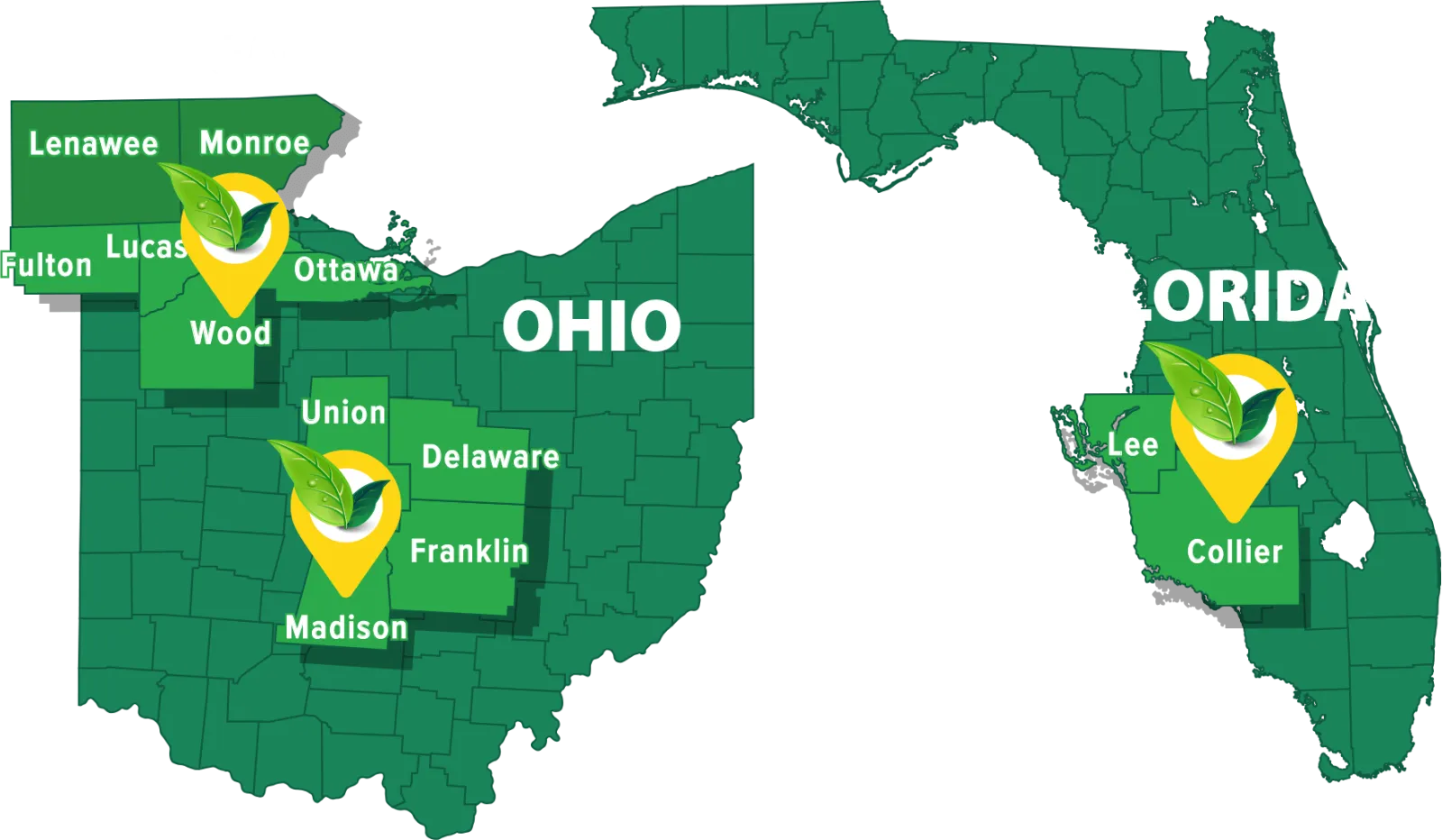
Areas We Service in Ohio and Florida

We’ve proudly served neighborhoods in Ohio and Florida for over 51 years and our technicians have mastered the art of customized lawn care for both climates, so you can count on a healthy lawn for all seasons.

Image
service area map, ohio, michigan, florida

Customer Testimonials

5 Star Review

Chris has great customer service. He is prompt, Knowledgeable and courteous. He has always been wonderful about keeping me informed about how long to keep my dogs off of the lawn after being treated, which is very important to me.

Ann Lorton
Perrysburg Office
5 Star Review

My yard looks great

Terri Brenner
5 Star Review

Dennis did a thorough job in covering my yard with broadleaf fertilizer today. He even did the strips between the sidewalk and street. He also did a wonderful job in blowing the fertilizer off the sidewalk and driveway. He promptly got to work and did a neat and tidy job. Thank you for the prompt and courteous customer service!

Michele Kowalik
Plain City Office
Contact Us
Name
Contact Info
Address
test
test2
By submitting this form, you are agreeing to the privacy policy and terms and conditions.
Validation
Submission