
Why Your Toledo-Area Lawn Turns Brown in Summer (And What to Do About It)
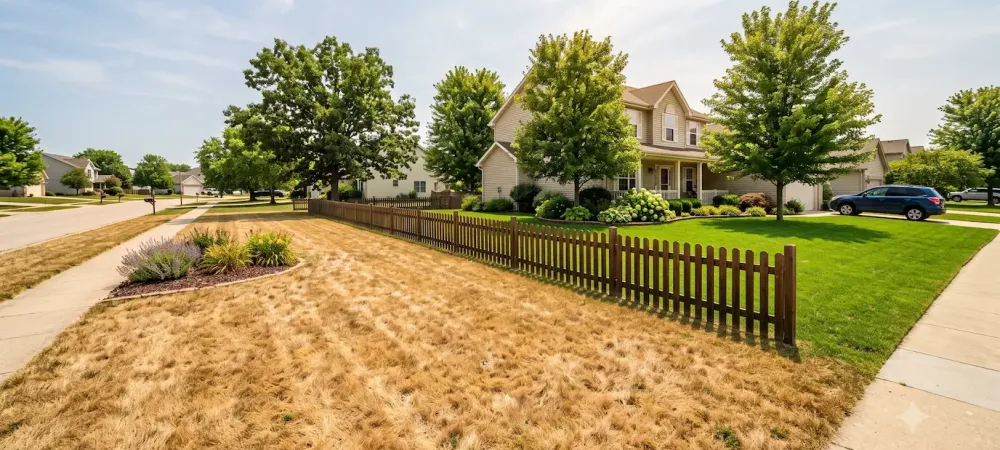
Brown grass in a Toledo-area lawn in summer is almost always dormancy, not a lawn that is dying. Cool-season grasses (Kentucky bluegrass, tall fescue, and perennial ryegrass) cover most Northwest Ohio properties and naturally slow growth and turn tan when temperatures climb and soil moisture drops. The lawn looks dead. It is not. Understanding what is actually happening, and more importantly what not to do in response, protects the lawn from the real damage that poor summer decisions cause.
What Does Summer Dormancy Actually Mean for Ohio Lawns?
Cool-season grasses survive summer stress by shifting into dormancy: growth stops, the blades turn tan or straw-colored, and the plant redirects energy to protecting its crown and root system. The crown is the growing point of the grass plant just at soil level, and it stays alive even when blades appear dead. As long as the crown survives, the lawn can green back up when temperatures drop and rainfall returns, which typically happens in September across northwest Ohio.
Ohio State University Extension notes that cool-season grasses face their greatest stress during Ohio's summer heat and drought periods, and that minimizing additional stress during dormancy is the most important action homeowners can take. The grass does not need help in summer. It needs to be left alone. Most of the damage done to Ohio lawns during summer is done by homeowners trying to fix something that does not need fixing.
How to Tell Whether Your Ohio Lawn Is Dormant or Actually Dying
A dormant lawn will be uniformly tan or straw-colored across the entire yard, without obvious dead zones, and the discoloration develops gradually over several weeks. A lawn with real damage shows irregular patterns: dark brown or gray dead patches in specific areas, discoloration spreading outward from a focal point, or dead sections concentrated near driveways and south-facing exposures where heat builds. The distribution of the problem is the first diagnostic clue.
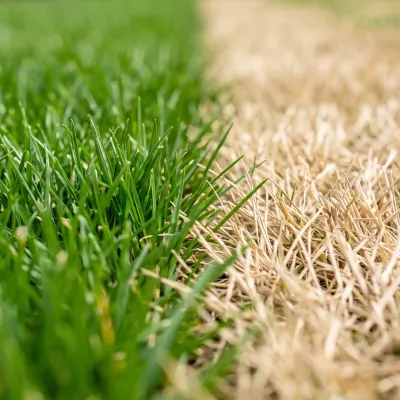
Pulling a grass blade from a dormant lawn reveals a tan blade with a firm, pale crown at the base. A dead plant pulls out easily with no resistance, and the base is dark, soft, or absent. The pull test takes ten seconds and answers the question most homeowners spend a week worrying about. A firm crown means the plant is alive and will recover. Ohio lawns can remain in dormancy safely for up to six weeks without significant rainfall or irrigation, according to OSU Extension guidance on lawn care practices. Beyond that window, crown death begins to occur and recovery in fall becomes less certain.
The Watering Mistake That Causes Real Damage
The most damaging thing a Toledo homeowner can do to a dormant lawn is water it inconsistently. Watering once or twice a week is more harmful than not watering at all. When a dormant lawn receives occasional water, it breaks dormancy, pushes new growth, then gets hit by heat stress again. Each cycle depletes the energy reserves the crown needs to survive until fall, weakens the plant, and creates conditions for summer disease.
The correct approach is a clear choice between two options. Let the lawn stay fully dormant with minimal water, about half an inch every two to three weeks to keep the crown alive without waking the plant up, or commit to consistent deep irrigation two to three times per week to keep it actively growing and green. Half measures cause the most damage. For most Toledo homeowners without a permanent irrigation system, allowing full dormancy and recovering naturally in September is the better call.
Why Toledo Lawns Handle Summer Stress Differently Than Other Ohio Markets
Toledo and Lucas County sit on some of the heaviest clay soils in Ohio. Clay soils retain more moisture than loam or sandy soils, which typically delays the onset of summer dormancy. Toledo-area lawns often stay green deeper into the summer season than properties on lighter soils further east or south. The tradeoff is that when clay soils do dry out, they harden and crack, making it difficult for water to penetrate during the next rain event. Surface runoff increases and the soil profile stays dry even after a moderate storm.
Lawns in the Plain City and central Ohio area tend to have lighter, more mixed soils. They may go dormant slightly earlier in the season but typically recover faster when fall rains arrive because water infiltrates more readily. Both markets share the same cool-season grass types and the same overall dormancy timeline, though they arrive at it at slightly different points in the season.
What to Avoid Doing to a Dormant Ohio Lawn in Summer
Mid-summer is the wrong time for several common lawn care activities. Ohio State University Extension confirms that fertilizing during summer heat increases the severity of turfgrass diseases and is not recommended. Pushing new growth during the hottest weeks forces the plant to consume energy it cannot replenish while temperatures remain high. The result is a weakened lawn heading into fall at exactly the point when it needs to be building reserves.
Beyond fertilization, avoid aerating, seeding, applying weed control, and walking on dormant turf more than necessary. Dormant grass blades are brittle and do not recover from mechanical stress the way actively growing grass does. Foot traffic compresses already stressed soil and can damage crowns permanently. Wait until the third week of August at the earliest before starting any fall lawn preparation work. If soil temperatures are still above 70°F, even fall work can wait.
How a Professional Lawn Care Program Sets Ohio Lawns Up for Summer
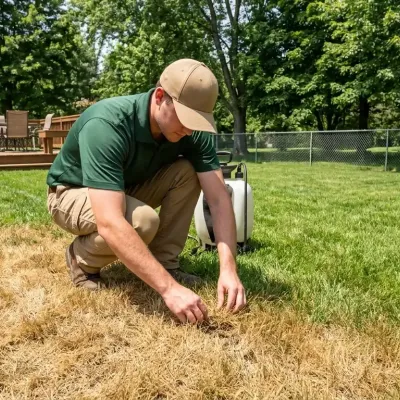
The timing decisions made in spring, including when fertilizer is applied, at what rate, and with what product, directly affect how well a Toledo-area lawn handles summer heat. A professional lawn care program applies fertility at the correct points in the growing season, avoids pushing excessive green growth heading into summer, and reduces the nitrogen load at the time of year when the lawn is least able to manage it.
Late summer is also when Land-Art begins preparing properties for fall aeration and overseeding. Aeration and overseeding performed in late August through mid-September gives cool-season grass the best start heading into its primary growing season. A lawn that spends the summer in healthy dormancy, left undisturbed, typically responds better to fall aeration than one that was pushed through inconsistent watering cycles all season.
Frequently Asked Questions About Ohio Lawn Summer Dormancy
Yes. Brown cool-season grass in Ohio during summer is almost always dormancy, not death. Kentucky bluegrass, tall fescue, and perennial ryegrass all go dormant as a natural response to heat and moisture stress. The lawn typically greens back up when temperatures drop and fall rains arrive in September.
Inconsistent watering during dormancy is more damaging than no watering at all. Either commit to regular deep watering to keep the lawn actively growing and green, or let it stay fully dormant and apply about half an inch of water every two to three weeks to keep the crown alive. Alternating between the two weakens the plant and increases disease risk.
For most Toledo and central Ohio lawns, late August through mid-September is the ideal window to begin fall lawn care. Aeration and overseeding in this window give cool-season grasses the best possible start heading into their primary growing season.
Concerned about your lawn's condition this summer, or ready to start planning for fall aeration and seeding? Call Land-Art at 419-666-5296 and we'll walk you through what your lawn needs and what to schedule for fall.