
What's Eating Your Fort Myers Lawn? How to Spot Tropical Sod Webworms
If your Fort Myers lawn had full green grass one evening and ragged, chewed patches the next morning, tropical sod webworms are the most likely explanation. They are the most destructive turf caterpillar in Southwest Florida. They feed exclusively at night, live in the thatch layer during the day, and most homeowners never see them. They only find the damage left behind. They are also routinely misdiagnosed as chinch bugs or fungal disease, which leads to the wrong treatment and a lawn that keeps getting worse.
What Are Tropical Sod Webworms and Where Do They Come From?
Tropical sod webworms (Herpetogramma phaeopteralis) are the larval stage of a small brown moth found throughout South Florida. Adult moths fly at dusk, lay eggs in turfgrass, and the larvae hatch and immediately move into the thatch layer, where they spend the day sheltered from heat and predators. After dark, the caterpillars emerge and feed on grass blades, cutting them off near the base or chewing irregular notches into the leaf. A single generation takes about four to five weeks to complete, and multiple overlapping generations are active through summer and fall in Southwest Florida.
UF/IFAS Extension identifies tropical sod webworms as a major destructive pest of warm-season turfgrasses across the southeastern US, with St. Augustinegrass residential lawns being among the most heavily affected. The pest is active year-round in South Florida, with populations building from late spring through fall.
What Does Tropical Sod Webworm Damage Look Like?
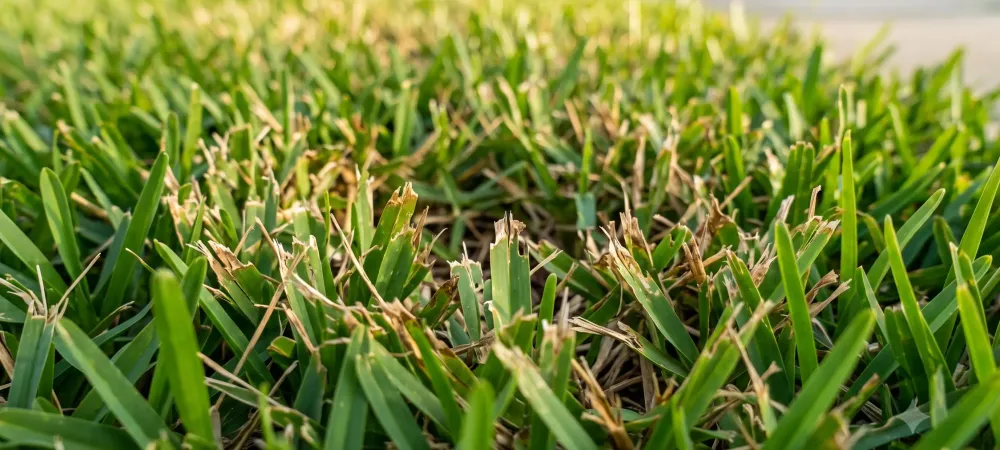
Tropical sod webworm damage produces irregular patches where the grass blades look chewed, notched, or cut short overnight. The affected area resembles a section of lawn that was scalped by a mower set too low. In early-stage infestations, the damage shows up as scattered thin or ragged areas through an otherwise healthy lawn. In heavier infestations, large sections lose most of their visible leaf tissue within a few days as multiple caterpillar generations feed simultaneously.
The damage tends to appear in the interior of the lawn rather than at the edges. This is one of the key visual differences from chinch bug damage, which typically starts near driveways, sidewalks, and south-facing exposures where heat concentrates. The grass underneath damaged areas is still rooted and alive in early infestations because the caterpillars are consuming blades, not roots. Fast identification and treatment give the lawn the best chance of recovering without overseeding.
Tropical Sod Webworms vs. Chinch Bugs: Getting the Diagnosis Right
Homeowners in Fort Myers and Cape Coral often assume summer lawn damage is chinch bugs, because chinch bugs are the most widely discussed pest for Southwest Florida St. Augustine lawns. The two problems look and behave differently, and treating one with the product meant for the other will not work.
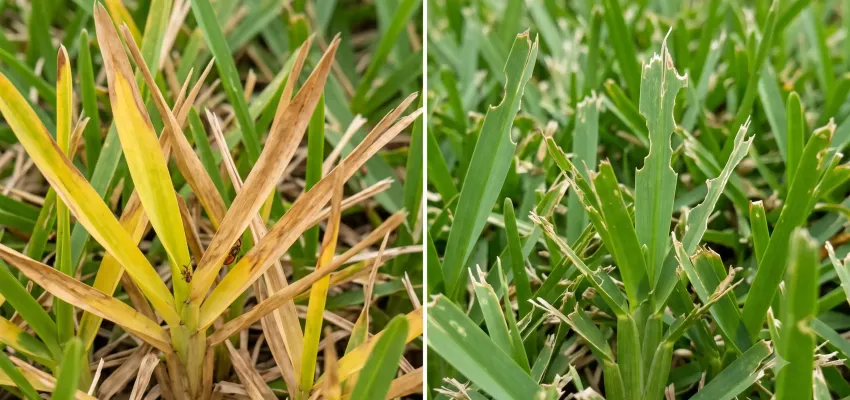
Chinch bugs feed by piercing the grass and removing plant juices, causing blades to yellow and then die. The damage starts near the hottest, sunniest parts of the yard, including edges adjacent to concrete, south-facing borders, and areas with thick thatch, and expands outward from those hot spots. Tropical sod webworms physically chew the blades. The grass looks cut or notched rather than yellowed or dying. Chinch bug pressure builds over days and weeks. Webworm damage can appear dramatically overnight in active infestations. The distribution and appearance of damage in the yard is the most reliable initial way to tell them apart before confirming with a test.
How to Confirm Tropical Sod Webworms Are in Your Lawn
Two tests confirm tropical sod webworm presence without professional equipment. Both take less than five minutes.
The flashlight test: Go outside after dark and hold a flashlight level with the lawn surface. In an active infestation, the beam will illuminate caterpillars moving across the turf and feeding on grass blades. Tropical sod webworm caterpillars are greenish or tan with dark spots and reach about three-quarters of an inch at maturity. Seeing two or more per square foot confirms a damaging infestation.
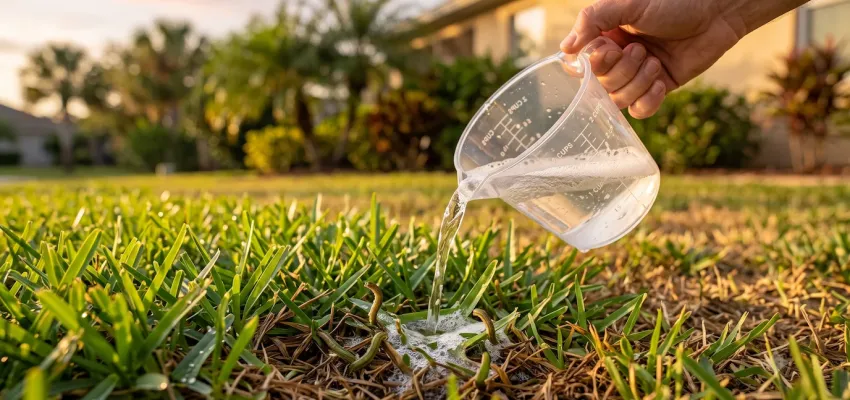
The soap flush test: Mix two tablespoons of plain dish soap into one gallon of water and pour the mixture evenly over a one-square-foot patch of suspected turf. Wait two to three minutes. Active caterpillars will surface from the thatch. According to UF/IFAS Extension, finding two or more caterpillars per square foot using this method indicates a population level that warrants treatment. Run the test in multiple spots across the yard to get an accurate picture of how widespread the infestation is before treating.
When Are Tropical Sod Webworms Most Active in Southwest Florida?
Tropical sod webworms are present year-round in South Florida but reach their highest populations from late summer through fall. July through November is the primary window of concern for homeowners in Fort Myers, Estero, and Bonita Springs. Population pressure often spikes after periods of sustained summer rainfall, when lush new growth gives larvae an abundant food source and warm, humid nights extend feeding windows. Lawns that received heavy irrigation or experienced flush growth from rainy season fertilizer are more vulnerable during peak season.
The rainy season overlap matters. The same warm, wet conditions that drive gray leaf spot fungal disease in Southwest Florida in 2026 also drive tropical sod webworm populations. A lawn showing summer damage may be dealing with one problem or both simultaneously, which is why correct diagnosis before treatment is important.
How Professional Pest Control Treats Tropical Sod Webworms
Treating tropical sod webworms requires getting the application timing right. The larvae shelter in the thatch during the day and emerge to feed after dark. Insecticide applications made in the late afternoon or early evening, just before feeding activity begins, are significantly more effective than morning treatments when caterpillars are buried below the spray contact zone.
Irrigation before treatment also matters. A light watering 30 to 60 minutes before applying insecticide brings caterpillars closer to the thatch surface and improves product contact. After application, avoid irrigating for at least 24 hours to let the product remain active where the caterpillars are feeding.
Land-Art's outdoor pest control service treats tropical sod webworms as part of a broader Southwest Florida pest management program. A correctly treated lawn should show no new chewing damage within a few days of application. The grass blades that were already damaged will not regenerate. Individual blades do not regrow once cut. The lawn fills in from new growth pushed by healthy crowns and roots, typically visible within two to three weeks if the infestation was caught before root-level damage occurred.
Frequently Asked Questions About Tropical Sod Webworms in Fort Myers
Over-the-counter products containing bifenthrin or spinosad can reduce webworm populations when applied correctly in the evening, just before caterpillars emerge to feed. Avoid watering or irrigating for at least 24 hours after application. Results are inconsistent without professional-grade products and correctly timed applications.
Run the soap flush test two to three days after treatment. Mix two tablespoons of dish soap into one gallon of water and pour over a one-square-foot area. No caterpillars surfacing means the treatment was effective. Continued chewing damage after treatment usually means the application timing was off or a follow-up application is needed.
If the infestation is caught before the caterpillars reach the root zone, the lawn typically recovers with new growth within two to three weeks. Deep infestations that damaged roots and crowns may require patching or overseeding. Learn more about Land Art's lawn care program for Southwest Florida for ongoing protection and recovery support.
Seeing overnight damage on your Fort Myers or Cape Coral lawn and not sure what's causing it? Call Land-Art at 419-666-5296 and we'll identify the problem and put a treatment plan in place.